Health Benefits Analysis and Enrollment

B2B2C Health Insurance, Product Design, UX/UI Design
Project Overview
Remodel Health is a health insurance startup helping organizations switch from group benefits to individualized health insurance plans.

My role was to provide direction on roadmap and design key product experiences.
Background
Role
Product Designer

Team
VP of Product, 3 Engineers

Tools
Sketch, Abstract, Miro, Whimsical

Projects
Health Benefits Analysis and Enrollment
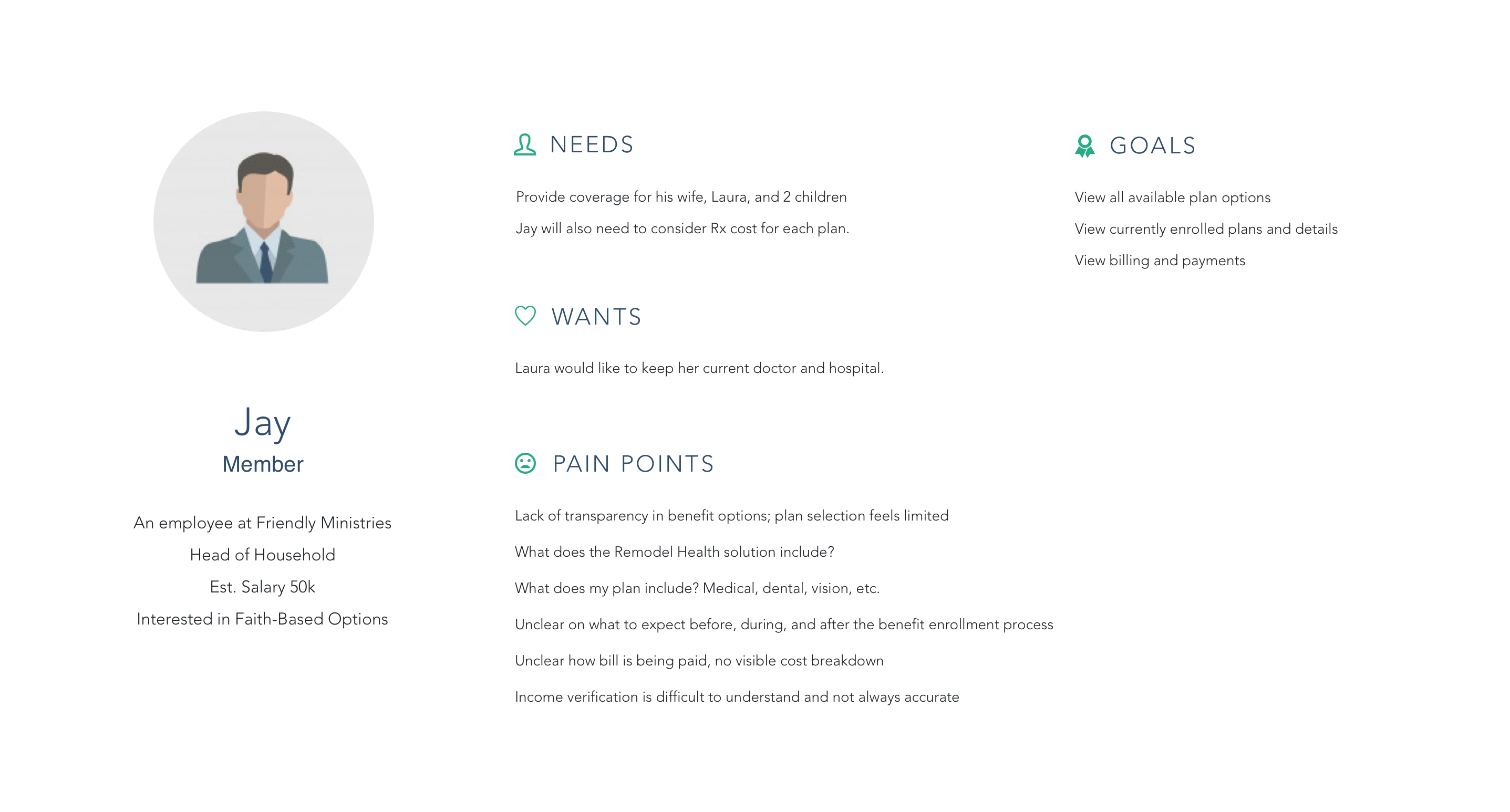
Image of User Persona, Jay
Personas
A research project to understand core users and provide insight for product roadmap.
Apr 2014 - Mar 2015
Background
The company would like to learn more about the pain points and opportunities for all users of the product.

Understanding the Problem
I conducted interviews with internal team leads and surveyed leadership to understand customer and user challenges and opportunities.

View Interview DataView Lean Business Canvas Survey
What did we learn?
View Summary
An image of the main screen of the redesigned health benefits survey.
Problem Space
Aug 2017 — forever
The Health Benefits Analysis determines a users health coverage needs and eligibility for tax credits. The existing solution was impacting user trust due to poor UI design, completion rates were less than 20%, and users were incorrectly reporting information.

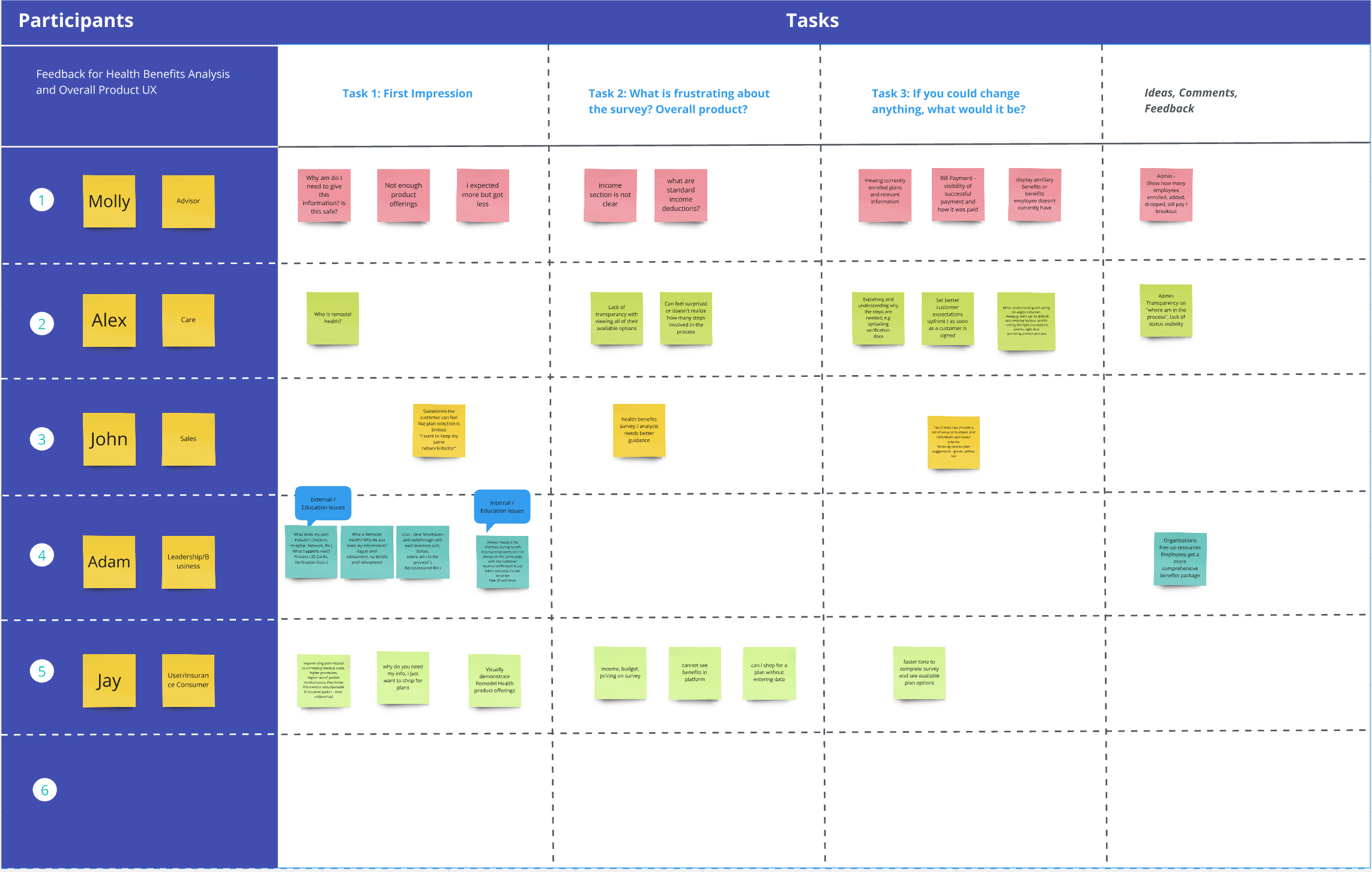
I interviewed department team leads from Sales, Marketing, Operations, and Leadership to better understand user first impressions, frustrations, and opportunities for the analysis and desired product enhancements. Interview results were organized in MIRO.
  • Clearly ask for Spouse, Parent, and Dependent Employer coverage.
  • Introduce instructional language to add clarity to each question.
  • Reduce questions by asking per household instead of per member.
  • Add progress indicator and break up questions to help guide the user.
An image of the other coverage spouse question in the survey.An image of the income deduction section.An image of the tax section.
Aug 2017 — forever
An image of the user research conducted using a MIRO board.
  • Clearly ask for Spouse, Parent, and Dependent Employer coverage.
  • Introduce instructional language to add clarity to each question.
  • Reduce questions by asking per household instead of per member.
  • Add progress indicator and break up questions to help guide the user.
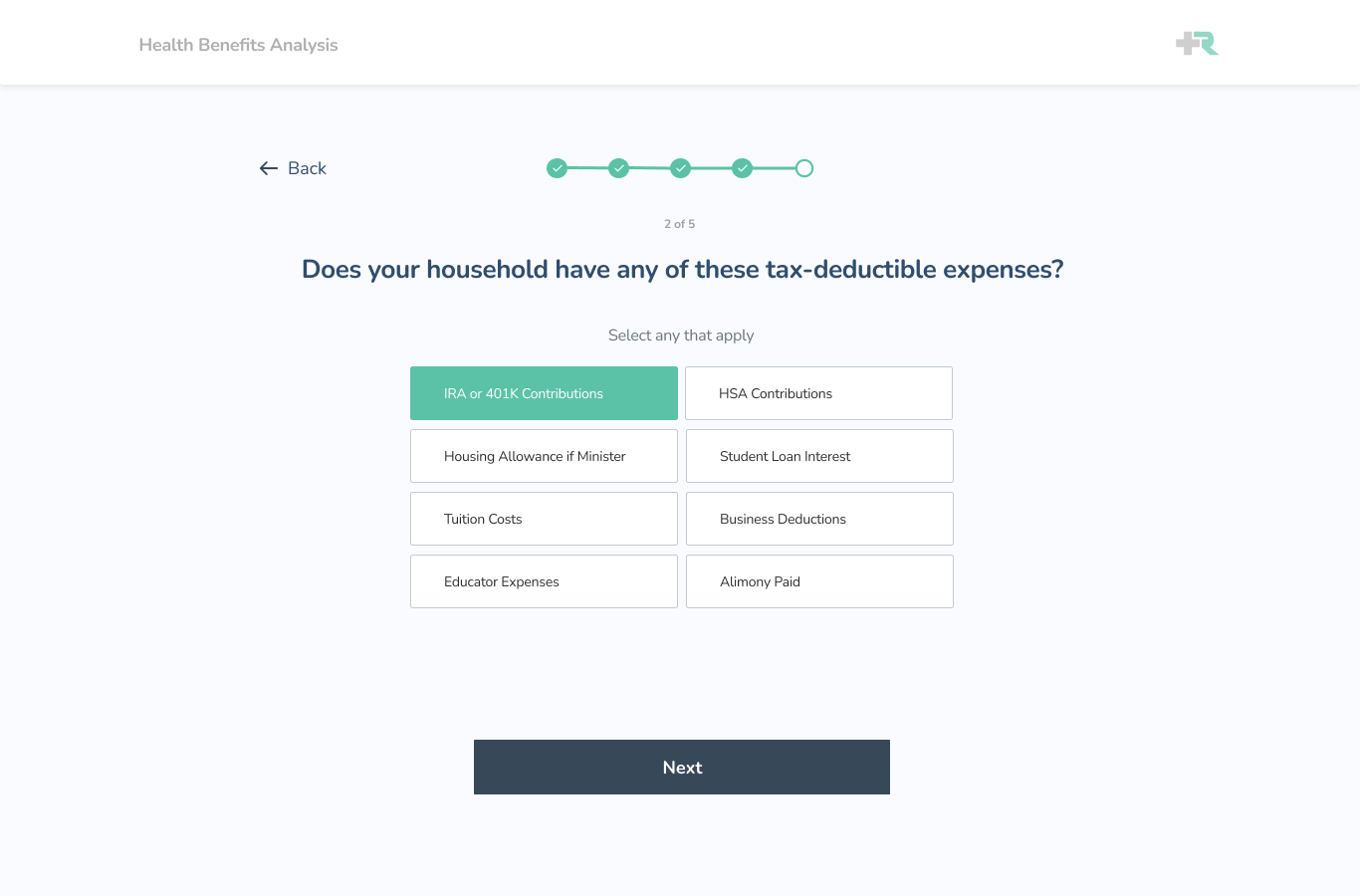
An image of the other coverage spouse question in the survey.An image of the income deduction section.An image of the tax section.
Personas
Aug 2017 — forever
The interviews revealed our initial user to focus on was the Consumer/Member needing coverage. Our secondary user was identified as the Insurance Admin/Team Admin.

  • Clearly ask for Spouse, Parent, and Dependent Employer coverage.
  • Introduce instructional language to add clarity to each question.
  • Reduce questions by asking per household instead of per member.
  • Add progress indicator and break up questions to help guide the user.
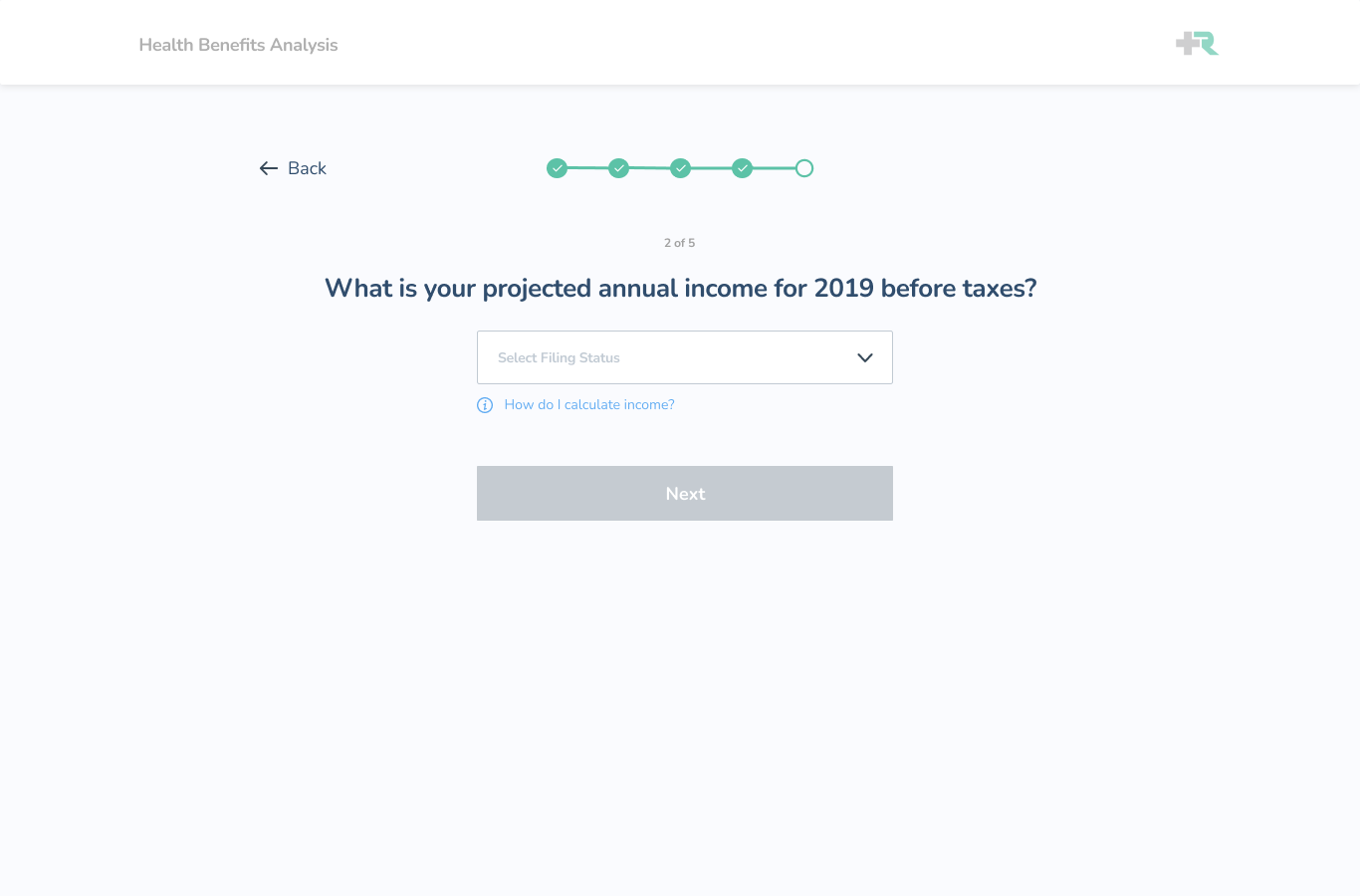
An image of the other coverage spouse question in the survey.An image of the income deduction section.An image of the tax section.
Aug 2017 — forever
Image of User Persona, Jay
  • Clearly ask for Spouse, Parent, and Dependent Employer coverage.
  • Introduce instructional language to add clarity to each question.
  • Reduce questions by asking per household instead of per member.
  • Add progress indicator and break up questions to help guide the user.
An image of the other coverage spouse question in the survey.An image of the income deduction section.An image of the tax section.
Health Benefits Analysis
Pain Points
Aug 2017 — forever
  • No instructions on why information is needed for income, spouse or dependent coverage, and doctors/Rx.
  • Unsure of income verification section on what deductions to apply to income. Incorrect wage increases were being assigned as a result.
  • Insurance advisors were unclear on complex insurance coverage scenarios for a spouse or dependent.
  • Clearly ask for Spouse, Parent, and Dependent Employer coverage.
  • Introduce instructional language to add clarity to each question.
  • Reduce questions by asking per household instead of per member.
  • Add progress indicator and break up questions to help guide the user.
An image of the other coverage spouse question in the survey.An image of the income deduction section.An image of the tax section.
Understanding The Problem
I conducted interviews with department team leads to better understand user first impressions, frustrations, and opportunities for the health benefits analysis and overall product. 

The interviews provided a foundation for user personas and desired product roadmap enhancements.

Prioritized User Needs
  • Lack of instructions on why information is needed for income, spouse or dependent coverage, and doctors/Rx.
  • Unsure of income verification section on what deductions to apply to income. Incorrect wage increases were being assigned as a result.
  • Insurance advisors were unclear on complex insurance coverage scenarios for a spouse or dependent.
An image of the user research conducted using a MIRO board.Image of User Persona, Jay
The Design Solution
Aug 2017 — forever
Enhance the visual design,
address question clarity, and introduce a stepper UX.
  • Introduce instructional language to clarify each question.
  • Reduce questions by asking per household.
  • Add a progress indicator and focus on one question at a time.
  • Clearly ask for Spouse, Parent, and Dependent Employer coverage.
  • Introduce instructional language to add clarity to each question.
  • Reduce questions by asking per household instead of per member.
  • Add progress indicator and break up questions to help guide the user.
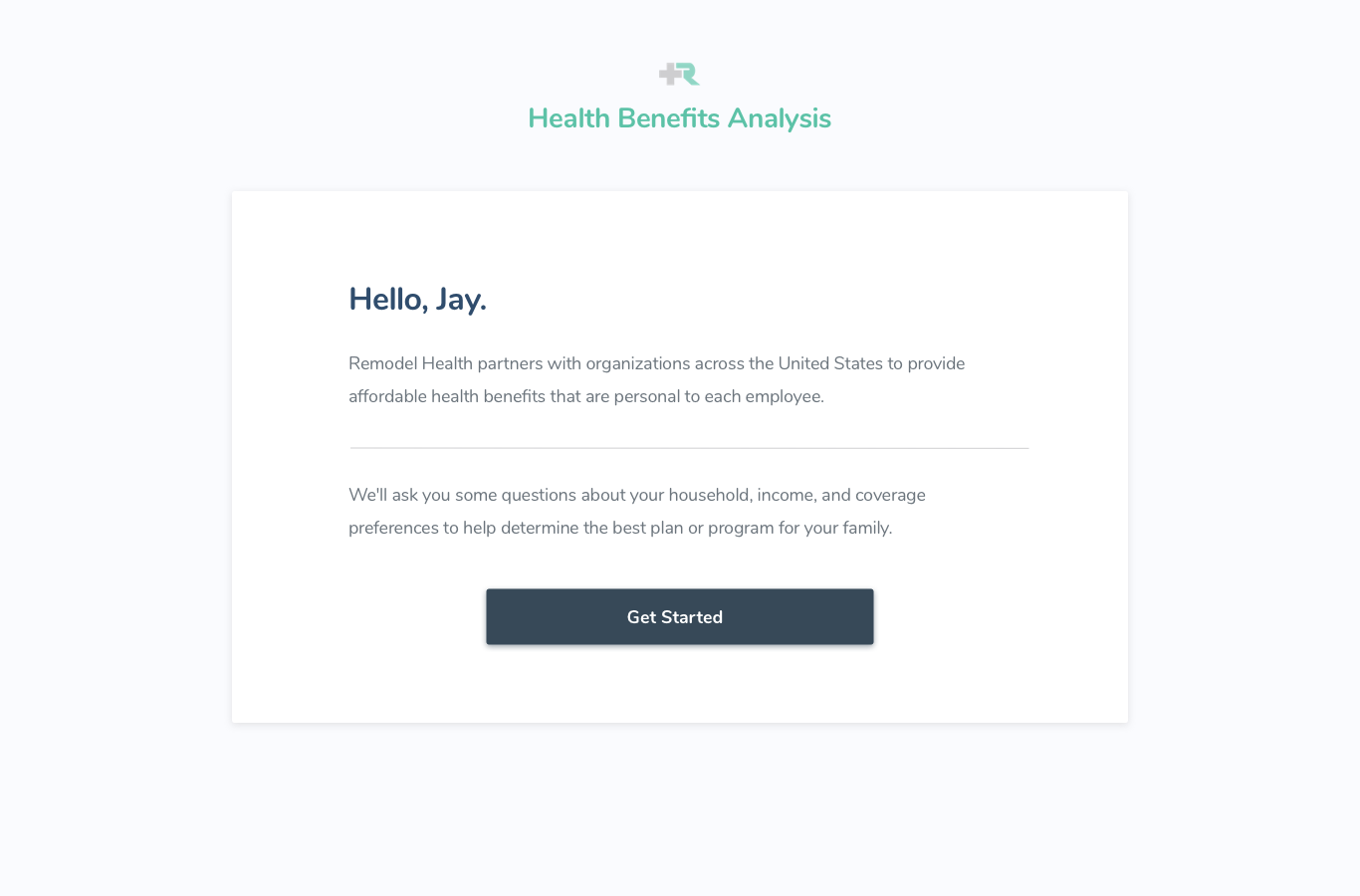
An image of the other coverage spouse question in the survey.An image of the income deduction section.An image of the tax section.An Image of the survey intro screen explaining the purpose of the health benefits analysis. An image of the other coverage spouse question in the survey.An image of the income deduction section.An image of the tax section.
Design Solution
Aug 2017 — forever
Enhance the visual design, address question clarity, and introduce a step-by-step UX.
Improve data accuracy, user trust, and user completion rate.
  • Lack of instructions on why information is needed for income, spouse or dependent coverage, and doctors/Rx.
  • Unsure of income verification section on what deductions to apply to income. Incorrect wage increases were being assigned as a result.
  • Insurance advisors were unclear on complex insurance coverage scenarios for a spouse or dependent.
An Image of the survey intro screen explaining the purpose of the health benefits analysis. An image of the other coverage spouse question in the survey.An image of the income deduction section.An image of the tax section.
  • Clearly ask for Spouse, Parent, and Dependent Employer coverage.
  • Introduce instructional language to add clarity to each question.
  • Reduce questions by asking per household instead of per member.
  • Add progress indicator and break up questions to help guide the user.
An image of the other coverage spouse question in the survey.An image of the income deduction section.An image of the tax section.
Problem Space
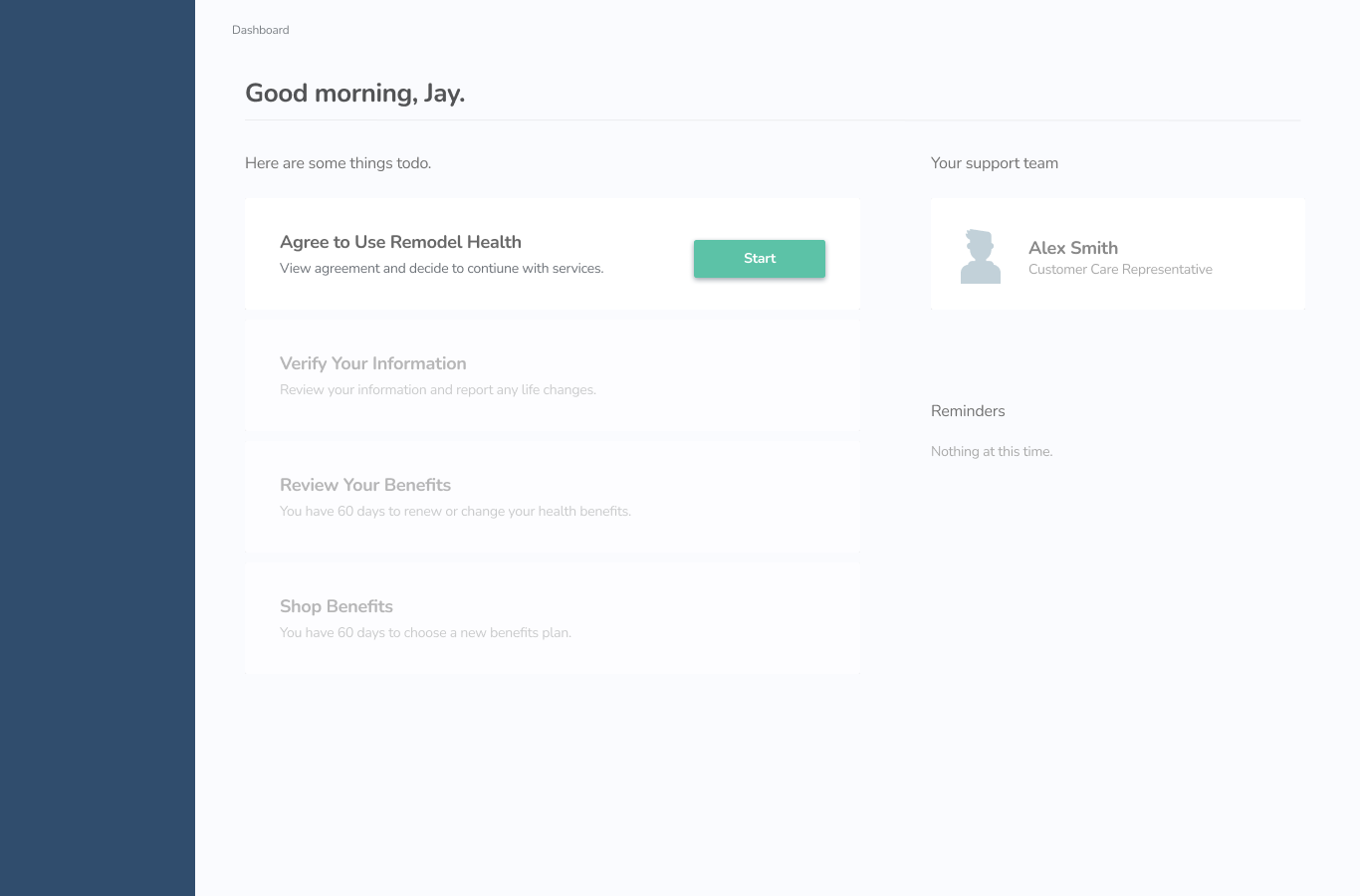
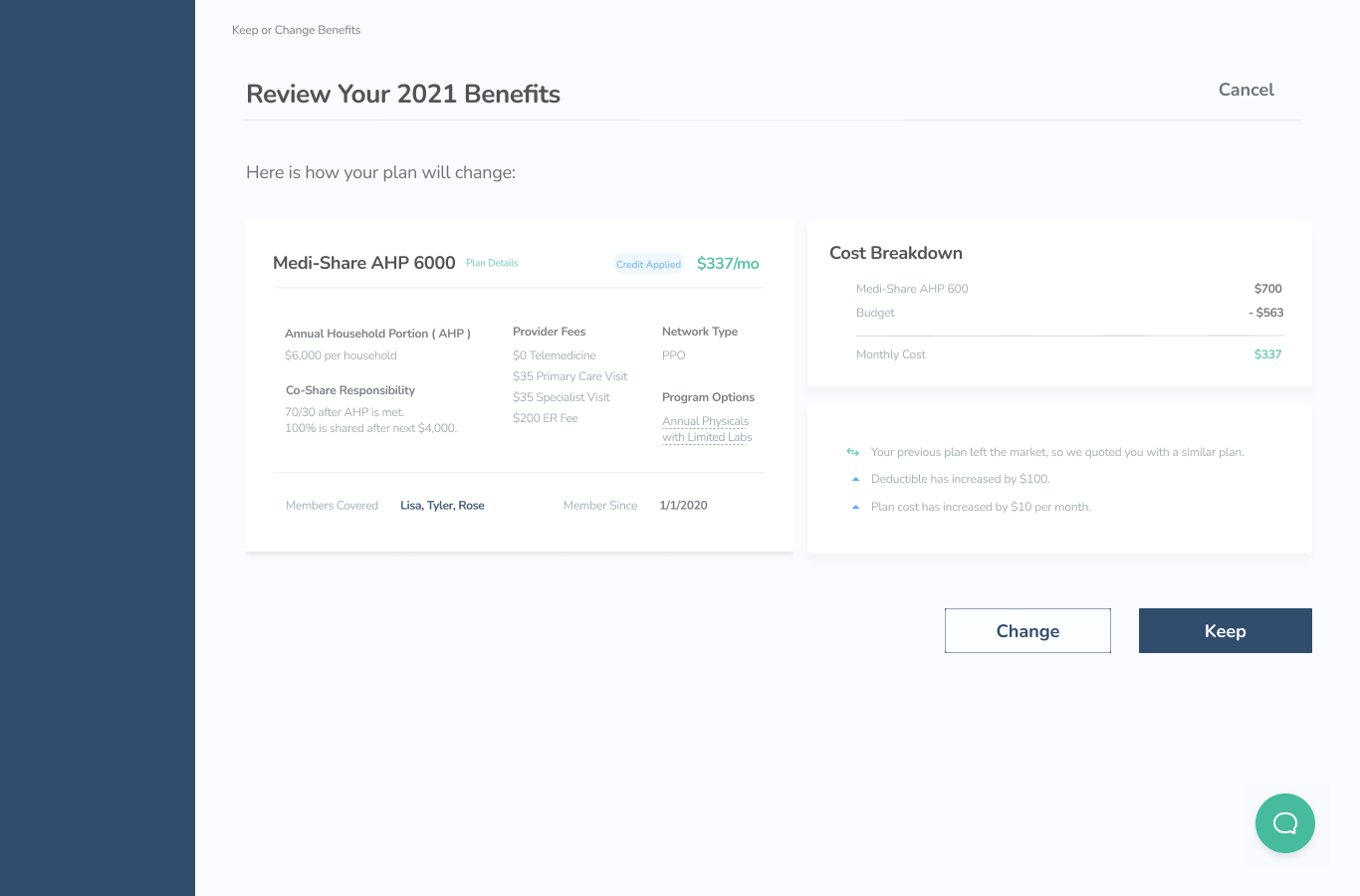
Plan details, pricing, and the ability to shop for a plan during open enrollment do not exist in the platform.

Exploring the Problem
Group interviews were conducted with benefits advisors and members to prioritize user wants, needs, goals, and insurance scenarios.


Benefits Workflow
View User Workflow
Benefits Enrollment
Aug 2017 — forever
Allow a member to renew their benefits in the platform.
+ 50% increase in user survey completion.
+ Sales and Operations teams reported satisfaction with the design outcome.
+ Personas influenced product roadmap and feature development.  
Impact
Aug 2017 — forever
View Next Project